Posted on Leave a comment

let them eat cake

I am in the process of edits, which means a lot of reading punctuated with spurts of writing/changing and a fair amount of admiration for writer-me who strung together some pretty decent words.

My writing process goes a little something like this:

  1. Zero-Draft, just get the plot onto the page
  2. Character Study, get the details down for reference
  3. First Edit, smooth out the plot on the page and add description/scene/dialog as needed
  4. Put the book down and work on something else for a while.
  5. Second Edit, clean up typos, fix plot holes
  6. Continuity Edit, make sure character descriptions and the like are consistent
  7. Read the whole thing out loud, fix things as they come up
  8. Polish
  9. Start the next book

I am on step 5 for the second book in the Blood Witch series. I have completed step 1 for book 3. Book 1 is complete (at least until it finds an editor) and I have begun querying agents.

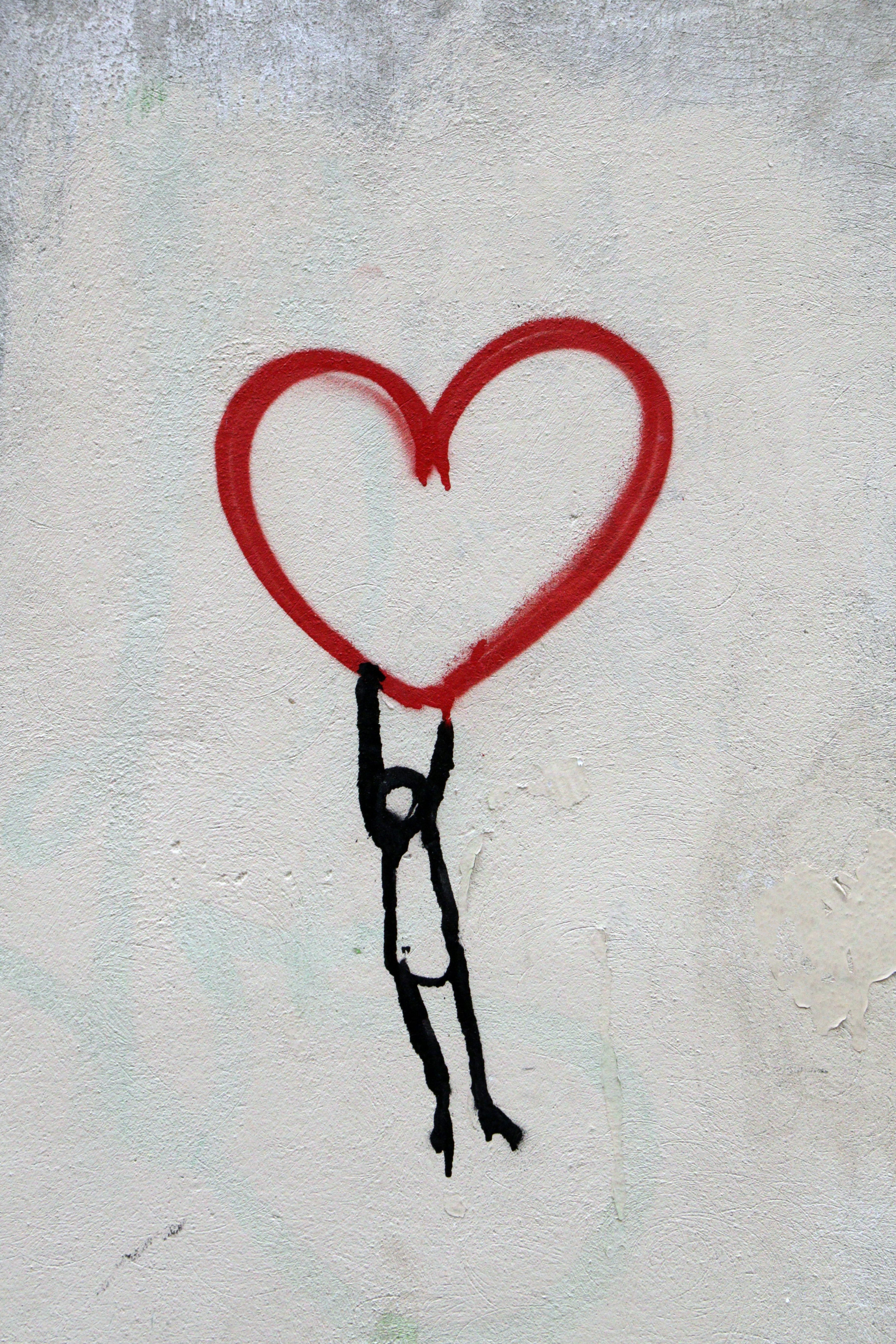
This is kind of the sweet spot for me, the time I am most happy with my writing. I love these characters. I love the world(s) I’ve built. There will still be a period of doubt, when I’m sure the whole thing is crap, but for now, I am wallowing in the love.

I don’t write to get rich or famous. In fact, I’ve made less in royalties in the years I’ve been publishing than I used to make babysitting as a teenager. I write because I have stories to tell, characters to introduce to the world. It’s nice to make a little money, sure. Would it be awesome if everyone loved these stories as much as I do? Sure. But it’s just icing. The cake is where I find satisfaction.

My coffee is almost gone, so I guess it’s time to get back to baking…I mean editing. Happy Sunday, Readers. May it be pleasant.

Photo by American Heritage Chocolate on Unsplash

Posted on Leave a comment

ain’t she a character

Sometimes I come here knowing exactly what I want to write about. Other times, I don’t have a clue until I start writing. Today is the latter.

I always come away from Sirens with new inspiration and this year that has become a series of character studies. I’ve always done them for my main characters, but I’m feeling my way through some of my minor characters for the first Blood Witch book.

I think it helps make them more three-dimensional and alive.

For me, a character study begins with physical characteristics, but delves into the person’s background/history as well as their personality. Mine tend to be fairly long, because I usually have a lot to say about a character, even if that never makes it onto the page.

It’s also a continuity tool. If I have complete character studies, I don’t generally have those little errors with things like eye color or height. And, it lets me carry those characters forward into the next book without losing track of things like educational background and such.

I start my character study early, sometimes even before I start writing, and I keep them open or easily accessible as I write so I can add to them as I go along. Then, I review them after I finish a book to make sure I captured all the information that is important.

I also use them while I edit. It helps me make sure I get the little things right.

That’s what I’m working on this weekend, updating character studies with all the good stuff that happened in books two and three before I start edits.

Right after this cup of coffee. Happy Saturday, Readers! And may the Samhain season bring you many blessings.

Photo by Mariana Medvedeva on Unsplash

Posted on Leave a comment

doing the work

Some days, when I sit down to write, my mind goes blank. Other days my fingers can’t type fast enough to get everything in my head down on paper/screen. Some days words flow freely and they express things beautifully. Other days it’s more like slogging through mud.

This last week or so there has been a lot of mud slogging. Every word feels like work. Every sentence falls flat.

Yesterday, I hit a point where I wanted to just toss it all. All 205700 words of this trilogy because it is just rubbish (it isn’t) and no one would ever want to publish it (someone will).

To help counter that mind set, I went back to some of my favorite pieces in this story, some of those sentences that sing, those paragraphs that hit with just the perfect (*chef’s kiss*) combination of snark and sass in the midst of terrible circumstances.

And I remember how it feels to write like that. And I remember that all of the slogging at least means there are words on a page, and I can edit words on a page into polished nuggets of gold. And I remember how much I love this story and this character.

Never let someone tell you that writing isn’t work. Hard work.

Do the work. Get the words out. Making them pretty can come later.

Write.

Posted on Leave a comment

inspire me

So, where do the stories come from? What makes a good story? Or…what makes a story good?

As with all art, it is up to the Reader to decide whether a story is good or not, and for many they can’t tell you why they feel that way.

Some of us like to read dark, dystopian stories that let us see that the hell of our reality could be so much worse. Some prefer lighter and brighter stories that let us see a better world/future. Some are in it for a driving plot. Others prefer character driven stories. Some want action. Some want comfort.

When I’m reading I like a lot of different kinds of stories. I am drawn to science fiction and fantasy, especially when the characters are vibrant and relatable, even if they are aliens or elves.

However, when I write, tend to stick a little closer to home. All of my published work, and the current series I’m working on, take place in our world (at least to start). My characters are where my story comes from, what my stories rely on. Without them, there is no story.

So, what makes a good character?

Look at the people in your own life. See them for who they are, all their faults and foibles, all of their joys and triumphs. Each of your characters should be that real. Take your time with them, yes, even the background characters should have their own life.

When I am just getting started with a character, I build what I call a character sheet. It includes name, age, height, build, eye and hair color, etc. Then I will add a short backstory. I have a section for character traits (lazy, loves cocoa, overly casual, etc), and how those traits play out in behavior.

It makes a good reference point while writing, but it also gives me what I need when I read through the story for that character. And yes, I read through each story for each character before it goes to my editor…yes, that can be a lot of read throughs!

Probably 80% or more of what goes onto the character sheet never makes it into the story, other than being in the character. For background characters that can be as high as 90%, but I could pick up that character and write the story from their point of view at any time because I know them that well.

My characters are people. Sometimes I hang out in the bar in my head with them while they tell me who they are.

What about you, Reader? What do you look for when you’re reading?

Posted on Leave a comment

let’s build

I get asked fairly often how it is that I do what I do. For a long time I didn’t realize that not everyone has an endless loop of stories in their heads or characters that pull up a chair to have a chat. It seems inconceivable to me and I know that in those brief periods of writer’s block I felt like I was going crazy without them.

Each story starts as either a character who just springs to life in my mind, or as world building. Brain, my muse, loves world building. I have hundreds of partially defined worlds in my head at any given time. Sometimes it starts with a concept, say a universe where corporations govern, or gender-bent Victorian era. Sometimes it begins with a character, say an orphan raised in restrictive religious colony that shuns technology but is herself a technological wonder or a pickpocket who is quick on her feet.

Those are the easy things. The stuff that comes before the writing.

Of course, the challenge then is to populate those worlds with characters that will get the reader’s attention or to find a world for that character to live in.

When it comes to plot, I often start writing without one. The first words I get out tell us something about the character, usually by dropping in on them in the middle of some scenario or situation that may ultimately have nothing to do with the primary plot, but gives us a good idea who this person is.

Most of the time, I let the plot fill itself in as I write. Sure, this means that sometimes I have to do some extensive re-writes to make sure it all comes together, but I find that this is where the story comes to life for me. Sometimes I have specific plot points in mind that I want to hit along the way, but not always.

Of course, because Brain is fond of world building, I sometimes craft these meticulously detailed worlds that then sit idle until the right set of characters come around. I have a notebook full of these, and a folder on my One Drive as well.

Now, if I could just get Brain back to the work of telling this story! I have two weeks until I start my new job to try to finish the zero draft of the third Blood Witch book. My coffee is getting cold, Readers, so I’ll leave you here. Have a fabulous Sunday.

Photo by Hello I’m Nik on Unsplash

Posted on Leave a comment

let’s talk tense

As a new writer, one of the hang ups I had was tending to slip between past tense and present, particularly when I was writing action. There’s just something more intense about action in the present tense.

It was an accident that I would sometimes catch, and sometimes not. I still do one thorough reading pass on everything I write just to look for tense slip ups.

None of this to say that one is right and the other wrong, but like POV and you narrative voice, your tenses need to be consistent or you risk pushing your reader out of the story.

I don’t know that I’ve ever read a full novel that was written in present tense, but I’ve read, and written, a fair number of short stories that were. It seems to work particularly well with actions scenes, as I already said, and in particular with sex scenes.

And yeah, I’ve written a few of those in my day. Present tense seems to feel more immediate, more intimate for those moments. However, if your entire story is all past tense, and your action is present tense, well it just feels off. Some readers will recognize the problem, others will only realize that something is different.

Don’t let it keep you from getting your first draft down on paper/screen though. That’s what editing and editors are for.

Happy Friday, Readers! I accepted a job offer yesterday, so I have two weeks to try to finish up the last Blood Witch book before I’m back to the daily grind!

Posted on Leave a comment

from a certain point of view

As a reader, one of the things that can kick me out of a story or make me put a book down is what I call “point of view slips”. You know, you’re reading along in one point of view and there’s that random sentence/paragraph that is written in a completely different point of view.

Of course, as a writer, one of the easiest ways to avoid this kind of slip is to write in first person. If my narrative voice is I/me, I’m not going to accidentally tell you what another character is thinking/feeling without that character expressing it in some way.

As an editor and writing coach, this is one of the areas that I dig into. I tell my clients to ask a few questions to help them sort it out.

  1. Who is telling the story?
    • Even in third person narratives, the story is told/experienced through a character. Who is it? What do they know/see/hear/observe?
  2. How does that character know the information in that different point of view?
    • Is your character a mind reader?
  3. Is it necessary for your reader to know what that second character is thinking/feeling? Is it more important than what your primary character is thinking/feeling?

As an example, let’s take a look at how this might present in a fictional setting.

"Harold set his mug down on the table and surveyed the room as the chime on the door announced a new arrival. His impatience was building. He never did like waiting.  Nancy was always late, but he could see her now, shaking the rain off her umbrella in the doorway.  
A thousand apologies ran through her mind as she saw him waiting there, but she settled for lifting a hand in greeting while she finger combed her damp hair.
Harold nodded to the coffee he'd ordered for her, standing to receive her air kiss and shivering when her cold hand touched his arm."

That middle paragraph there takes the reader out of Harold’s point of view, and drops them into Nancy’s with no real pay off. There is nothing in that paragraph that is essential to the reader, or if that is the part that is important, then perhaps the author has chosen the wrong point of view character.

The question then is: Who is telling this story? Whose character has most to contribute to the reader’s understanding of the action? If it is truly Harold, the middle paragraph needs to change to reflect what Harold sees/hears/understands of Nancy’s arrival. If instead, the point of view with the most to offer is Nancy’s, then the rest of the piece needs to be reworked to show her understanding of her arrival and Harold’s impatience.

That isn’t to say that point of view changes are bad. We’ve all read books where the author chooses to change the POV character for various reasons. The trick is knowing when, where and how to do it.

What say you, Readers? Is this a sticking point for you too?

Photo by Warren Wong on Unsplash

Posted on 1 Comment

word-working

Most weekends are set aside as time for writing/editing/other book related ings. Sometimes I dump several thousand words onto a page. Sometimes I strike a couple hundred off the page. Sometimes I tweak little things.

But there also days when I research odd things, fall down a rabbit hole of baby names sites, draw (badly) maps to help me keep directions straight. And then there are days where I’m looking for an agent, or I’m banging on promo work.

Very rarely, I get to use this time just to enjoy my own work, or lose myself into a new project, whether that’s a new book, a short story, a poem.

I do some of these things during the work week too, but I don’t have whole days to devote to them the way I do on the weekend. At least a half hour every day I am poking words in some way, shape or form outside of the wordworking I do in the day job.

This weekend I am diving deep into the world of The Blood Witch, part editing/part writing, as I attempt to patch up some plot holes and get some of the stuck bits moving again.

I love these characters, and this world. I look forward to being able to share them with you all one day.

Have a great Sunday, Readers! Stay safe. Stay cool. Maybe tuck into a lovely book.

Photo by Alexandra on Unsplash

Posted on Leave a comment

love what you do, do what you love

Every story I write, there comes a time somewhere in the writing or editing (or both) where I decide the whole plotline sucks, when I’m ready to chuck the whole thing and give up writing forever. Every single time. Sometimes at multiple points in the journey from concept to published story.

I’ve recently hit this again on The Blood Witch. I’ve pulled the complete set of stories together so I can work through some continuity issues and plug some plot holes, and as I’m reading/editing to weave pieces together, I hit a point that I’m sure it sucks.

Fortunately, having been here before, I know to step back and stop until I’ve sorted through what in the plot is bugging me. Always, when I remember to do this, I come back after a few days of rumination and I re-find my love of the story.

And, Readers, I do love this story so much! I love the characters. I love the way the plots of each of the three books is different, and takes us new places. I love my MC’s voice, which is important since she is telling the story. I love getting to play with mythology and mythical creatures.

I’m not sure of the ending just yet, but I’m getting there. And really, getting there is the better part anyway!

Okay, off to prep for a meeting for the day job. And maybe more coffee. Coffee is life!

Photo by Nick Fewings on Unsplash

Posted on Leave a comment

the beauty in brevity

There is something I love about the freedom in a short story. There is no obligation to begin at the beginning, in fact it is sometimes more fun to jump in somewhere in the middle.

Short stories ask more skill of us authors, in some ways, than a full length novel. There is the challenge of brevity, which is a thing I often struggle with. If you have five thousand words to tell the tale, each of those words becomes important. Your characters need to be able to convey not just story, but personality and point of view quickly, but without making your reader feel rushed.

Often when I’m working on a short story, I throw words on the page to start, far more words than necessary and often imprecisely used. Then I use my first edit pass to tighten up the language, replace the imprecise with something more fitting. I boil down descriptions to the best words. I render ten words down to three or four.

All the while, I’m whittling away at not just the word count, but at the story itself, distilling it down to a more perfect form. Think of it as a block of stone. We know that there is a work of art inside of it, but we have to work to chip away the parts that obscure it.

There are a bunch of short stories on my hard drive in some state of doneness, some begun for a specific project, others just to get the words out of my head. Maybe I’ll consider an anthology of these works at some point, but for now, I am off to finish polishing and buffing one for this year’s Sirens anthology.

Happy Saturday, Readers! I hope the coffee is good, the sun is shining and your day is filled with kindness.

Photo by Matt Seymour on Unsplash