Posted on Leave a comment

writing my way into 2024

Happy New Year, Readers! In the hope of starting the year out right, I aim to get some writing done this morning. I got stuck on the fourth Blood Witch book, so I’ve switched gears and gone back to The Daughters of Morru.

I’m at the point in the plot there that I need to finesse my way into a time jump. Our heroine needs to get to sixteen to get us to the next plot point.

The words are flowing, so I’m hoping it’s a good sign.

I hope you all have a peaceful and amazing year.

Photo by BoliviaInteligente on Unsplash

Posted on Leave a comment

changing gears

I’ve felt stymied on Book 4 of the Blood Witch Saga for months on end. I stare at the page and I type a few words, but I’m stuck.

So, yesterday I broke out one of the other works in progress, “The Daughters of Morru” which has been languishing on my hard drive for over a year. I read through the first three chapters yesterday after work and I can feel inspiration for the story. 

I am going to focus on that for a bit, see if I can’t shake loose some of this writer’s block. 

It is always a fun thing to reconnect with characters you love, whether as a writer or a reader. Hell, even as a watcher of movies/tv. It’s why we rewatch favorite shows.

I’m not sure if this will be a stand alone or develop into something more, but I have a good idea where the story is going, and how to get there from where I am.

I think I’ll read some more while I sip on my morning cup of coffee.

Photo by Laura Ockel on Unsplash

Posted on Leave a comment

meet Anne Gothfried

The city of Gavelscore resembles London in the 1880s, except the society is matriarchal and women run much of the world. The language resembles Old English, so when Thána is approached by someone who speaks English with an Australian accent, she’s shocked and intrigued.

To hear Anne tell the story, she fell through a hole and found herself in this backward world with no real idea how to get home. She adjusts to her new situation though and makes a place for herself as a gambler, frequenting the taverns and saloons around the country.

When she hears Thána and Daria speaking in English, she introduces herself, drawn to something in Thána, and begins to ingratiate herself into Thána’s orbit, offering her advice in dealing with the people in the small city.

The question is, is Anne friend or foe? What does she have to do with the murders happening around them? And what does she want with Thána?

Posted on Leave a comment

meet Stâlian Susanna Batorry

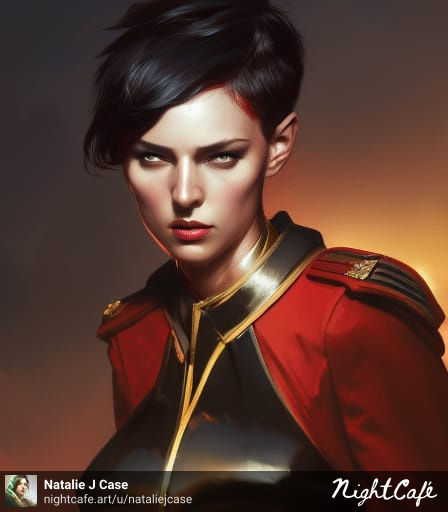
Thána and her friends find themselves in a world of many dangers, including the church militant. Like the rest of the world, the church, and its military, are led by women. Stâlian Susanna Batorry is the sharp weapon of this military, called The Mother’s Weapon.

When we first meet her, she has come to Gavelscore to hunt, judge, and execute witches.

As a child, she witnessed her sister’s death, by means of a witch’s curse (supposedly) and thereafter dedicated her life to eradicating witchcraft. She joined the church and quickly worked her way up to a leadership position to become the head witch hunter.

Dedicated and loyal, Batorry is a True Believer and that could spell trouble for our heroes.

Posted on Leave a comment

Hêalic: The Blood Witch Saga Book 3

Yesterday I turned in my final edits on book three of the Blood Witch Saga. I think it’s my favorite of the series. What’s not to love about a gender-bent Victorian society, a Jack-The-Ripper style serial killer and magic?

Thána, Xen, and Daria find themselves in a world where witches are killed by hanging, and both a virulent plague and a serial killer eerily similar to Jack The Ripper are hunting the populace.

They have no idea how to get back to Meerat, let alone Spítia. Complicating matters, Thána is suffering withdrawal from the xýpna powder and her powers are depleted, leaving her vulnerable. And if that’s not enough, Katyk has come through the first portal with them, but not the second, and Thána feels like she’s being hunted.

After the serial killer takes an interest in Thána, every move she makes might be her last. Can she find their way back to the portal before she ends up dead?

Hêalic: The Blood Witch Saga Book 3

I’ll be introducing you to some of the new characters this coming week, though mostly background players. Cover reveal will happen on my Instagram and Facebook on Wednesday.

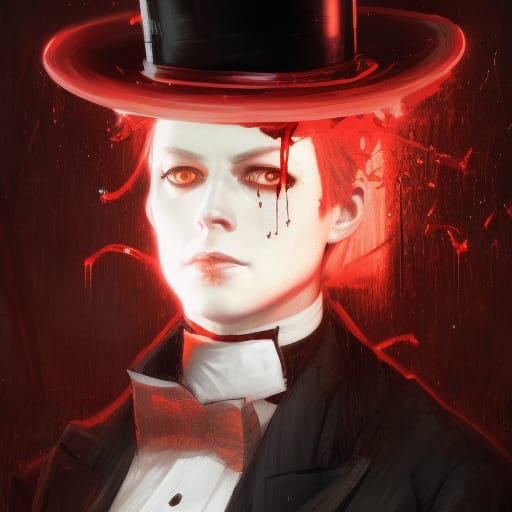
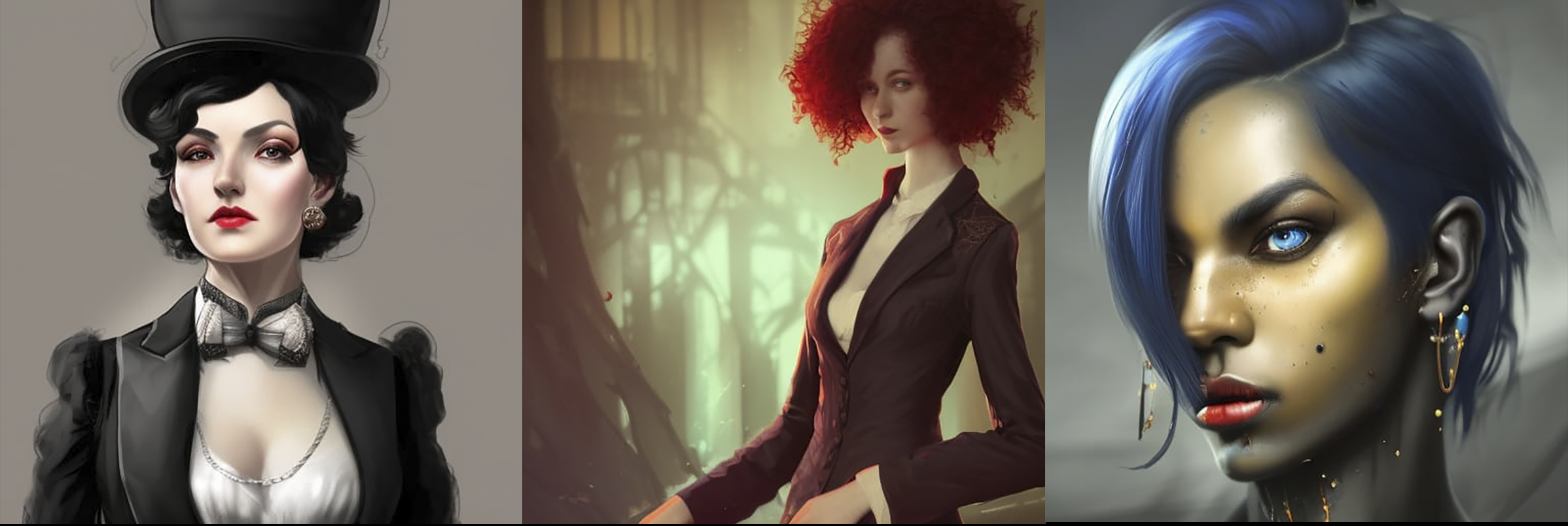
I was playing with https://creator.nightcafe.studio/ this morning and the image above is the result. Thána, Daria and Xen…or some version thereof.

I also got some writing done on book 4 this weekend. It’s a bit choppy, but it’s coming along.

We’re back to Monday and the day job awaits. Tis the season of kindness, Readers. By kind to yourself too.

Posted on Leave a comment

meet Daria Alizon Delnar

Today, I want to introduce you to Daria, Thána’s younger sister.

Despite the fact that they were not raised together, Daria has always lived in Thána’s shadow in one way or another. When they were young, Daria’s life revolved around keeping Thána out of the hands of the Brotherhood. Later, it was about keeping their secret safe.

Daria is a talented potion maker and garden witch, with a gift of prophecy that is equal parts helpful and frustrating. In Vaneesh, where she and her mother settle after secreting Thána away, Daria comes into her own, growing into her gifts and experimenting with new magic whenever she has time.

Daria married a native Vaneesh man named Habros Delnar and has one son, a sensitive young man named Kota. When we meet Daria, she’s been taken by an invading army, forcing Thána once more into the role of family savior.

It’s been nearly twenty-three years since the girls were together and circumstances with push them to overcome the distance to survive.

Mörderin: The Blood Witch Saga Book 2 is coming your way, Readers!

Photo by Artem Maltsev on Unsplash

Posted on Leave a comment

ain’t she a character

Sometimes I come here knowing exactly what I want to write about. Other times, I don’t have a clue until I start writing. Today is the latter.

I always come away from Sirens with new inspiration and this year that has become a series of character studies. I’ve always done them for my main characters, but I’m feeling my way through some of my minor characters for the first Blood Witch book.

I think it helps make them more three-dimensional and alive.

For me, a character study begins with physical characteristics, but delves into the person’s background/history as well as their personality. Mine tend to be fairly long, because I usually have a lot to say about a character, even if that never makes it onto the page.

It’s also a continuity tool. If I have complete character studies, I don’t generally have those little errors with things like eye color or height. And, it lets me carry those characters forward into the next book without losing track of things like educational background and such.

I start my character study early, sometimes even before I start writing, and I keep them open or easily accessible as I write so I can add to them as I go along. Then, I review them after I finish a book to make sure I captured all the information that is important.

I also use them while I edit. It helps me make sure I get the little things right.

That’s what I’m working on this weekend, updating character studies with all the good stuff that happened in books two and three before I start edits.

Right after this cup of coffee. Happy Saturday, Readers! And may the Samhain season bring you many blessings.

Photo by Mariana Medvedeva on Unsplash

Posted on Leave a comment

inspire me

So, where do the stories come from? What makes a good story? Or…what makes a story good?

As with all art, it is up to the Reader to decide whether a story is good or not, and for many they can’t tell you why they feel that way.

Some of us like to read dark, dystopian stories that let us see that the hell of our reality could be so much worse. Some prefer lighter and brighter stories that let us see a better world/future. Some are in it for a driving plot. Others prefer character driven stories. Some want action. Some want comfort.

When I’m reading I like a lot of different kinds of stories. I am drawn to science fiction and fantasy, especially when the characters are vibrant and relatable, even if they are aliens or elves.

However, when I write, tend to stick a little closer to home. All of my published work, and the current series I’m working on, take place in our world (at least to start). My characters are where my story comes from, what my stories rely on. Without them, there is no story.

So, what makes a good character?

Look at the people in your own life. See them for who they are, all their faults and foibles, all of their joys and triumphs. Each of your characters should be that real. Take your time with them, yes, even the background characters should have their own life.

When I am just getting started with a character, I build what I call a character sheet. It includes name, age, height, build, eye and hair color, etc. Then I will add a short backstory. I have a section for character traits (lazy, loves cocoa, overly casual, etc), and how those traits play out in behavior.

It makes a good reference point while writing, but it also gives me what I need when I read through the story for that character. And yes, I read through each story for each character before it goes to my editor…yes, that can be a lot of read throughs!

Probably 80% or more of what goes onto the character sheet never makes it into the story, other than being in the character. For background characters that can be as high as 90%, but I could pick up that character and write the story from their point of view at any time because I know them that well.

My characters are people. Sometimes I hang out in the bar in my head with them while they tell me who they are.

What about you, Reader? What do you look for when you’re reading?

Posted on Leave a comment

let’s build

I get asked fairly often how it is that I do what I do. For a long time I didn’t realize that not everyone has an endless loop of stories in their heads or characters that pull up a chair to have a chat. It seems inconceivable to me and I know that in those brief periods of writer’s block I felt like I was going crazy without them.

Each story starts as either a character who just springs to life in my mind, or as world building. Brain, my muse, loves world building. I have hundreds of partially defined worlds in my head at any given time. Sometimes it starts with a concept, say a universe where corporations govern, or gender-bent Victorian era. Sometimes it begins with a character, say an orphan raised in restrictive religious colony that shuns technology but is herself a technological wonder or a pickpocket who is quick on her feet.

Those are the easy things. The stuff that comes before the writing.

Of course, the challenge then is to populate those worlds with characters that will get the reader’s attention or to find a world for that character to live in.

When it comes to plot, I often start writing without one. The first words I get out tell us something about the character, usually by dropping in on them in the middle of some scenario or situation that may ultimately have nothing to do with the primary plot, but gives us a good idea who this person is.

Most of the time, I let the plot fill itself in as I write. Sure, this means that sometimes I have to do some extensive re-writes to make sure it all comes together, but I find that this is where the story comes to life for me. Sometimes I have specific plot points in mind that I want to hit along the way, but not always.

Of course, because Brain is fond of world building, I sometimes craft these meticulously detailed worlds that then sit idle until the right set of characters come around. I have a notebook full of these, and a folder on my One Drive as well.

Now, if I could just get Brain back to the work of telling this story! I have two weeks until I start my new job to try to finish the zero draft of the third Blood Witch book. My coffee is getting cold, Readers, so I’ll leave you here. Have a fabulous Sunday.

Photo by Hello I’m Nik on Unsplash

Posted on Leave a comment

from a certain point of view

As a reader, one of the things that can kick me out of a story or make me put a book down is what I call “point of view slips”. You know, you’re reading along in one point of view and there’s that random sentence/paragraph that is written in a completely different point of view.

Of course, as a writer, one of the easiest ways to avoid this kind of slip is to write in first person. If my narrative voice is I/me, I’m not going to accidentally tell you what another character is thinking/feeling without that character expressing it in some way.

As an editor and writing coach, this is one of the areas that I dig into. I tell my clients to ask a few questions to help them sort it out.

  1. Who is telling the story?
    • Even in third person narratives, the story is told/experienced through a character. Who is it? What do they know/see/hear/observe?
  2. How does that character know the information in that different point of view?
    • Is your character a mind reader?
  3. Is it necessary for your reader to know what that second character is thinking/feeling? Is it more important than what your primary character is thinking/feeling?

As an example, let’s take a look at how this might present in a fictional setting.

"Harold set his mug down on the table and surveyed the room as the chime on the door announced a new arrival. His impatience was building. He never did like waiting.  Nancy was always late, but he could see her now, shaking the rain off her umbrella in the doorway.  
A thousand apologies ran through her mind as she saw him waiting there, but she settled for lifting a hand in greeting while she finger combed her damp hair.
Harold nodded to the coffee he'd ordered for her, standing to receive her air kiss and shivering when her cold hand touched his arm."

That middle paragraph there takes the reader out of Harold’s point of view, and drops them into Nancy’s with no real pay off. There is nothing in that paragraph that is essential to the reader, or if that is the part that is important, then perhaps the author has chosen the wrong point of view character.

The question then is: Who is telling this story? Whose character has most to contribute to the reader’s understanding of the action? If it is truly Harold, the middle paragraph needs to change to reflect what Harold sees/hears/understands of Nancy’s arrival. If instead, the point of view with the most to offer is Nancy’s, then the rest of the piece needs to be reworked to show her understanding of her arrival and Harold’s impatience.

That isn’t to say that point of view changes are bad. We’ve all read books where the author chooses to change the POV character for various reasons. The trick is knowing when, where and how to do it.

What say you, Readers? Is this a sticking point for you too?

Photo by Warren Wong on Unsplash